
Author: Marcy Burnham, RN
February is Heart Month, a time to raise awareness, inspire action, and save lives. When you see people wearing red, it’s often in support of women’s heart health initiatives like those led by the American Heart Association and its Go Red for Women movement. While heart disease is often perceived as a “man’s problem,” the reality is stark: cardiovascular disease is the leading cause of death for women.
Yet there’s another critical issue many people don’t realize; women are less likely to receive CPR during cardiac arrest.
Studies have shown that bystanders are significantly less likely to perform CPR on women in public compared to men. One contributing factor is discomfort or uncertainty about touching a woman’s chest, particularly due to concerns about:
- Fear of causing injury
- Fear of inappropriate contact allegations
- Lack of confidence in where to place hands because of breasts
- Limited exposure to realistic female training manikins
Most CPR training manikins historically have flat chests, designed around male anatomy. This creates an unintended training gap. When a real emergency happens, hesitation can cost a life.
Cardiac Arrest survival depends on immediate action. Brain damage can begin within 4–6 minutes without oxygen. Early CPR can double or triple survival chances.
When someone collapses and is unresponsive:
- CPR is always appropriate regardless of gender.
- Hands go in the center of the chest—between the nipples.
- Breasts do not prevent effective CPR.
- Doing something is always better than doing nothing.
Women are also less likely to survive cardiac arrest partly because their symptoms before collapse may be dismissed or misinterpreted. Having an Automated External Defibrillator (AED) nearby dramatically increases survival odds.AEDs are designed for anyone to use. They provide voice prompts, analyze heart rhythm, and only deliver a shock if needed. A community, workplace, gym, church, or home equipped with an AED, and people trained in CPR, creates a true lifesaving environment.
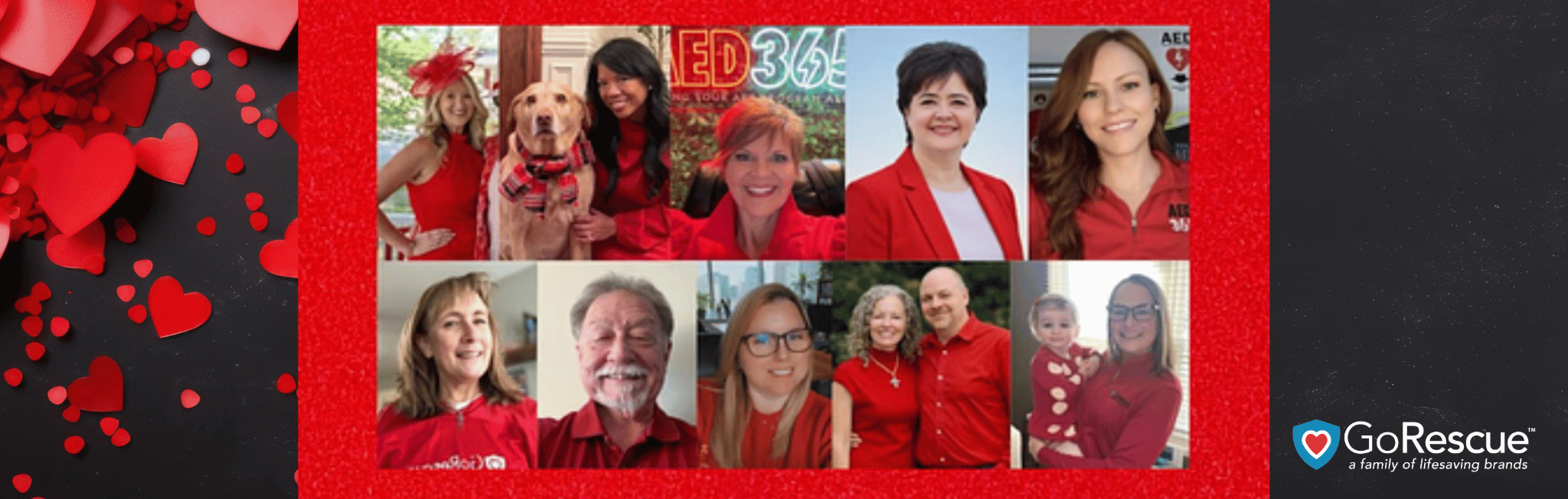
Wearing red during Heart Month is more than symbolic. It’s a commitment to:
- Learning CPR
- Advocating for women’s heart health
- Supporting access to AEDs
- Speaking openly about cardiac risk in women
- Eliminating hesitation to help
Because every mother, daughter, sister, friend, and coworker deserves the same chance of survival.
GoRescue is your source for lifesaving training and supplies!
- (844) 277-2527
- info@GoRescue.com
